GRILL & CHILLsteakhouseGRILL & CHILLsteakhouseGRILL & CHILLsteakhouse
1969, Barcelona. Still unmatched.
The Spanish charcoal oven-grill that changed how the world cooks over fire.
The Josper is not a grill. It is not an oven. It is something else entirely — a closed charcoal system that fuses the raw intensity of open flame with the precision of a professional oven. Born in Barcelona, refined over decades, adopted by over 40,000 kitchens across six continents. It sits in ours.
It began in 1969, in a small restaurant called Mas Pi, tucked into the coastal town of Pineda de Mar near Barcelona. Pere Juli, the restaurateur, faced a problem every grill cook knew too well — an open charcoal grill was unpredictable, wasteful with heat, and devoured enormous quantities of fuel. He needed something better.
He called on Josep Armangué, a local blacksmith with uncommon skill. Together, they imagined something that did not yet exist: a grill enclosed in a steel chamber that trapped all heat and smoke inside, yet still gave food the authentic character of live charcoal. From their names came the word the world now knows — JOSep + PERe = JOSPER.
From that single blacksmith's creation in a small Catalan restaurant, the Josper now operates in kitchens across six continents. No advertising campaign did that. The result on the plate did.


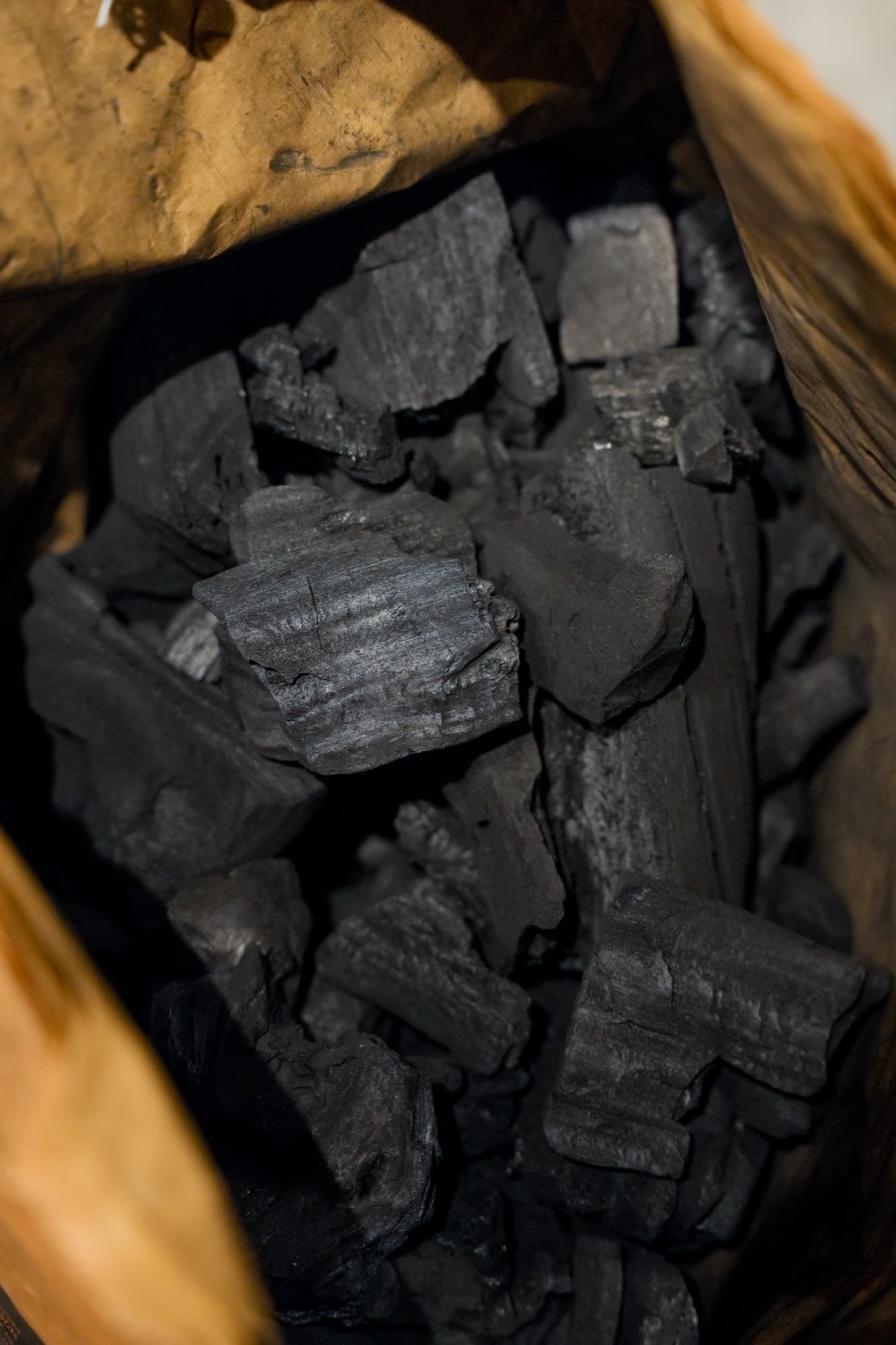
Imagine a grill sealed inside a steel chamber. Inside, white quebracho charcoal — one of the hardest, densest woods on earth — burns at a constant temperature between 300°C and 500°C. The door opens only to load or retrieve food. The rest of the time, the Josper stays shut.
Inside that enclosed chamber, the moment meat touches the grate, searing begins — a crust forms in seconds. Superheated air and smoke circulate around the food as in a convection oven, cooking it evenly from all sides. The result: a deep, smoky crust on the outside, and meat that stays juicy from the first bite to the last.
A figure that surprises most chefs: the Josper uses up to 40 per cent less charcoal than a conventional open grill. A closed system means heat does not escape — not a single degree is wasted. No gas. No electricity. Just charcoal and fire.
The unmistakable Josper signature. At extreme temperature, the surface of the meat caramelises into a crisp, lightly smoked crust that locks all moisture inside. That particular flavour cannot be replicated on any other piece of equipment.
At fierce heat, the Maillard reaction occurs in seconds — forming a caramelised barrier that slows moisture loss dramatically. A Josper steak releases its juices on the plate, not on the grill.
Grill, oven, and smoker — simultaneously. The Josper handles steak, fish, vegetables, even dessert. One machine. No limits.
Adjustable vents allow the chef to govern airflow and therefore temperature — from 250°C for controlled roasting to a full 500°C for intense searing. A Catalan blacksmith's precision, placed in service of flavour.
An open grill depends on wind, humidity, and the mood of the cook. The Josper depends on nothing but charcoal and technique. The steak emerges identical — time after time, without exception. That is why kitchens whose reputation rests on the plate choose the Josper.
When El Celler de Can Roca — a three-Michelin-star restaurant and multiple-time holder of the World's Best title — uses a Josper in its kitchen, the endorsement speaks for itself. From Tokyo to New York, Copenhagen to Dubai, the Josper is standard equipment in kitchens that accept nothing less.
Over 40,000 kitchens worldwide cook on a Josper — the collective verdict of chefs who tried everything else. At Grill & Chill, we bring that standard to Belgrade.
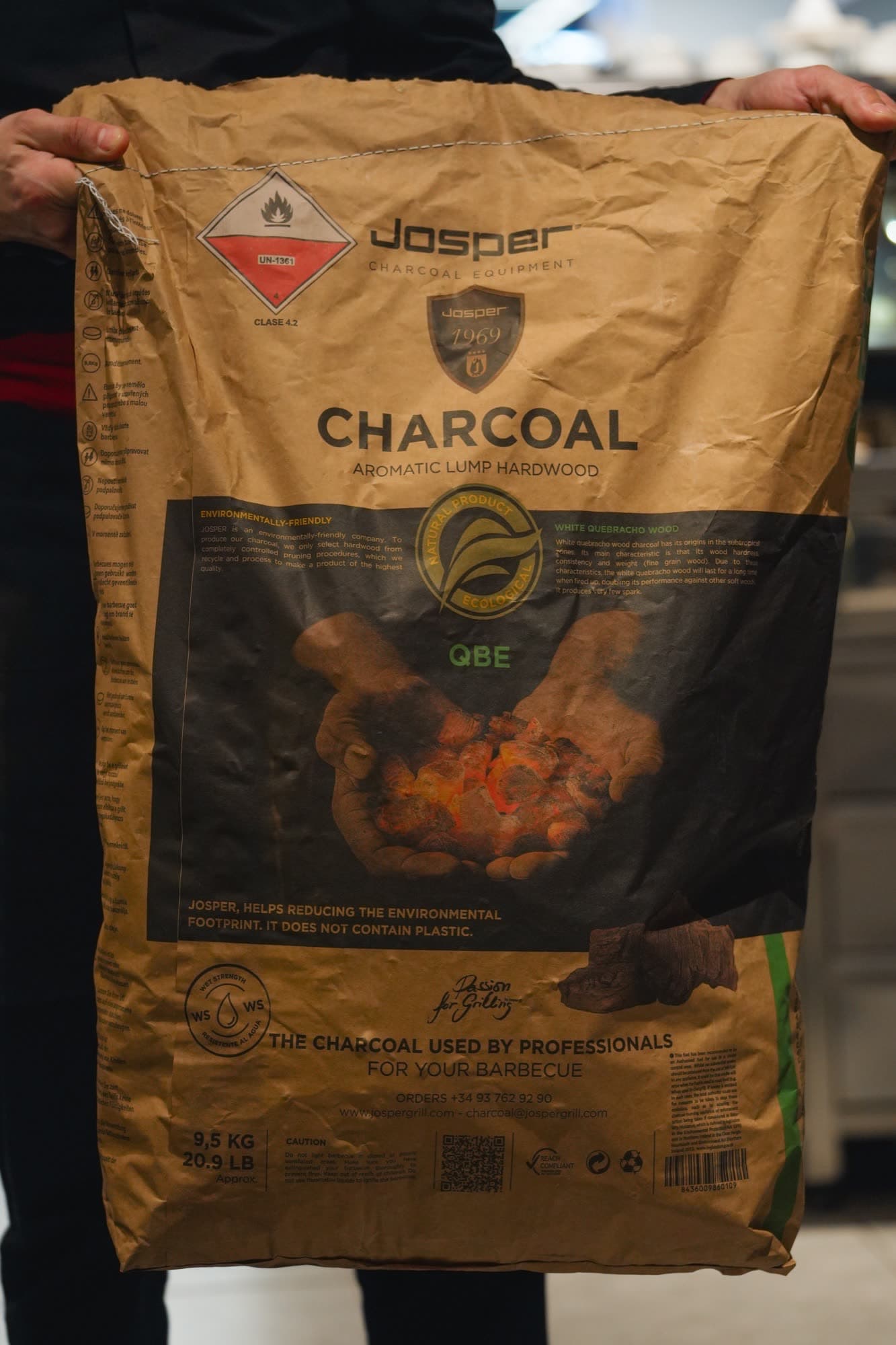
Our Josper fires from the first guest to the last, daily without exception. We feed it only white quebracho charcoal — the same fuel burned by leading kitchens from Madrid to Melbourne. Each steak, each fish, each burger that leaves this kitchen has been shaped by our Josper.
Our chefs have trained specifically on the Josper. They know how to read the fire, when to open the vents, exactly how many seconds it takes to build the crust on a 400-gram rib eye. At peak heat, skill and instinct converge — and a cut of meat becomes something you carry with you long after the meal.